
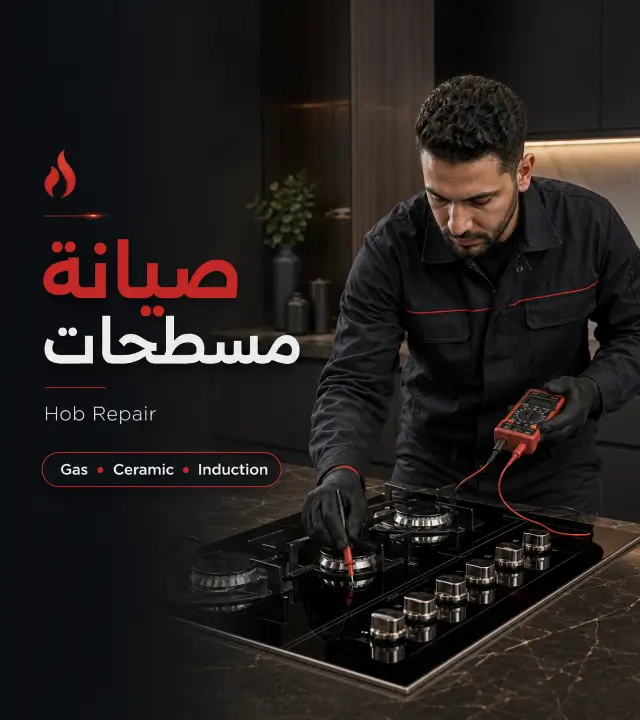
A hob is not a stove — its faults are different
 1
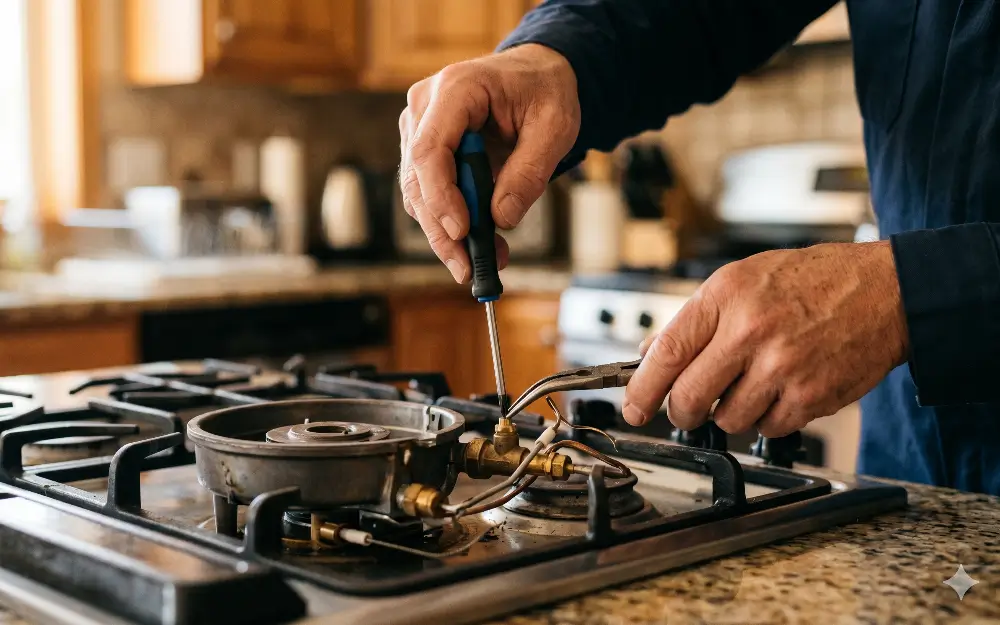
A hob is a precision appliance in every sense: within a few centimeters of thickness sit burners or heating coils, above an electronic board, above gas or electrical connections — all embedded in a counter. There is no room for rough work: a screwdriver in the wrong spot under the glass creates a new crack, and a rushed connection leaves a leak trapped under the marble.
 2
And there is a dangerous shortcut common in the market you should know about: a flame that keeps going out on its own is usually a worn safety sensor (thermocouple) — the correct fix is repairing or replacing it. But some technicians "solve" it differently: they bypass the sensor entirely. The result? The flame stays on, yes — but if it is ever blown out by a draft or boiled-over food, the gas keeps flowing and nothing shuts it off. Our fixed rule: the safety sensor is a red line — repaired or replaced, never removed.
 3
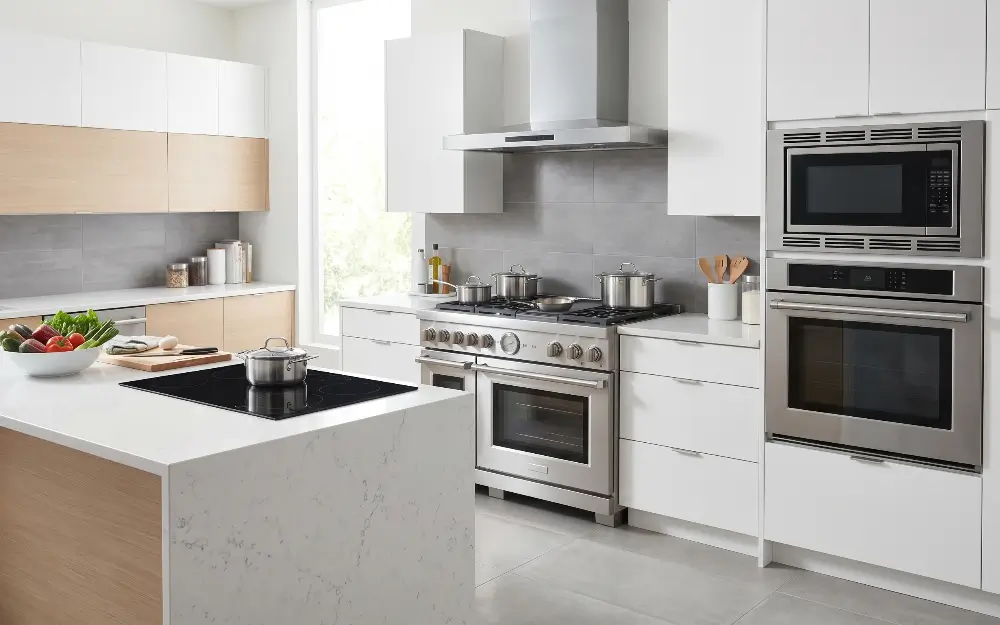
Induction and ceramic are another world: diagnosis by measurement on the coils, sensors and board; glass replaced in exact model-specific dimensions; and pan-detection sensors with their own calibration. And since a gas hob sits inside the counter, every leak test we run uses an electronic detector — a leak trapped under marble is one you will not smell in time.
Every hob type we repair
Whether traditional gas or advanced induction — we have the specialist for every type.
Hob types by technology
Gas hob
Traditional hob with gas burners. Common faults: auto-ignition, burners, gas safety sensors.
Learn moreElectric hob
Hob with traditional electric burners. Faults: heating elements, electronic board, heat regulator.
Learn moreCeramic hob
Hob with smooth ceramic glass surface and electric heating beneath. Faults: broken glass, heat sensors, heating elements.
Learn moreMost popularInduction hob
Newest technology — heats the pot directly via magnetism with no flame. Specialized faults: magnetic coils, pan-detection sensors, complex electronic board.
Learn moreDomino hob (2-burner)
A small 2-burner hob, usually next to a larger hob in modern kitchens or standalone in small flats.
Learn moreHob faults we repair
Each hob type has its own common faults. The specialist diagnoses precisely on the first visit.
Hob won't ignite
Auto-ignition failed, or the flame lights then dies on release — usually the thermocouple (safety sensor). We repair or replace it, never bypass it.
Causes & fixWeak hob flame
Blocked injectors or low gas pressure — cleaned and adjusted in one visit.
Causes & fixInduction hob won't work
Pan-detection sensor not reading the pot, or a failed heating coil — we measure before replacing anything.
Causes & fixBroken or cracked hob glass
Glass replaced in exact model dimensions. A small crack grows with every heat cycle — do not wait on it.
Causes & fixTouch panel doesn't respond
Electronic panel failed — needs repair or replacement.
Causes & fixHob overheating
Heat sensor failed; appliance doesn't stop at the target temperature.
Causes & fixHob trips the breaker
Electrical-circuit fault or protection issue.
Causes & fixStrange hob noise
Cooling fan (in induction) needs service or replacement.
Causes & fixYour issue not on the list? Call now and describe it to the technician.
Hob Specialist vs. Handyman — Safety First, Then Everything Else
A hob combines glass, electronics and gas in one slim appliance — and each one has its own rules. Here is the difference:
Thermocouple (safety sensor) repaired or replaced — the sensor is a red line
Some bypass the sensor entirely — flame works, safety is gone
Dedicated removal tools and correct leverage points — glass comes out intact
A screwdriver under the glass from any side — a new crack on top of the old fault
Coils, sensors and board measured with instruments — only the faulty part replaced
"Board's dead, replace it" — thousands of pounds without a single measurement
Electronic leak detector — a trapped leak is found before it becomes dangerous
A sniff and a lighter on the joints — good luck
Written terms based on the repair warranty on part and labor, recorded on the repair technical report
A verbal promise — then he stops answering
We service every hob brand
Modern hobs are mostly global brands. We have technicians trained on each one.




Your brand not on this list? Call now — we service the four specialist brands.
See the four specialist brands pagesHob repair across Cairo and Giza
within 24 hours in Cairo and Giza, 24-48 hours in other governorates.
Cairo & Giza
Arrival Within 24 hours
Other governorates
Arrival within 24-48 hours
Practical service guide for Hob repair
This page is not just a generic service description. It connects Hob repair with faults, brands, and service areas people actually search for, so users reach booking intent faster.
Hob repair near me
Choose your area from the area links to reach the nearest technician.
Hob repair for a specific brand
Choose the brand link to reach the matching service page.
Fault cause before booking
Check the related fault links to identify the likely cause.
Related services in the same customer journey
Faults related to this service
Common brands for this service
Why BuiltInFix for hob repair
Specialists in every hob type
Induction is not ceramic is not gas. We have technicians specialized in each technology to guarantee a correct fix on the first visit.
Full transparency
Written warranty
terms based on the repair and part used warranty + a clear technical report.
Safety sensors are a red line
Thermocouples, heat sensors and pan detection get repaired or replaced — never bypassed "so the appliance works". Your home's safety is not negotiable.